9 JANUARY 1904 – 5 NOVEMBER 1977
Who was Giorgio La Pira? He was a 20th century politician, and for many years Mayor of Florence. And he was a Lay Dominican. He was a tireless champion of peace and human rights during some of the most difficult decades of the 20th century, and is now recognised by the church as having led a life of heroic virtue.
Early Life
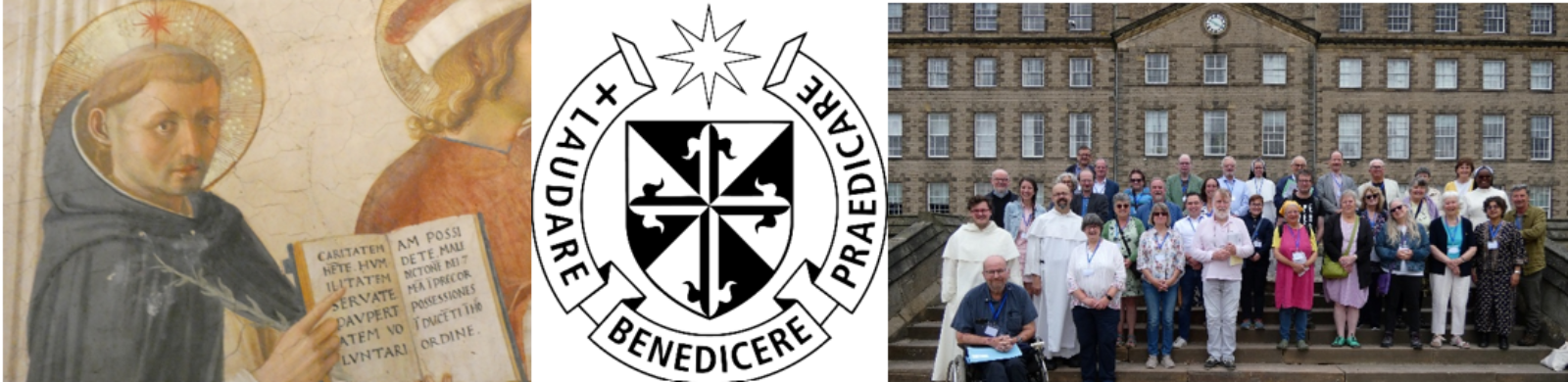
Born in January 1904 in Sicily, Giorgio La Pira was the eldest of six children. As a young man, he studied law in Sicily, before moving to Florence to continue his studies. Whilst studying, he became a Lay Dominican, and was professed in the Basilica of San Marco.
Life in Florence
Following his studies, he was appointed professor of Roman law in Florence, and became active in the Florence section of Catholic Action, working in poorer areas of the city and region. He founded a number of groups in Florence, providing spiritual and material assistance to the poor, including a regular Mass at the Church of San Procolo, for which he brought together young people from different economic backgrounds to work together.
La Pira began to meet regularly with Cardinal Elia Dalla Costa, Archbishop of Florence, to talk about current affairs in Florence and the rest of the world, and also with Fr. Giulio Facibeni, a charismatic figure in the local church. In Florence, the 3 men were known as Faith, Hope and Charity, with Giorgio La Pira usually being called Hope.
In 1936 he entered the San Marco Dominican Community, and lived in a cell at San Marco, living in poverty whilst giving his salary to the poor. During his stay in the monastery he studied the works of St. Thomas Aquinas, which were the formation of much of his philosophy.
The Second World War
1939 saw the beginning of the Second World War. Giorgio La Pira founded and edited an anti-fascist magazine, which defended freedom and the worth of the human being. The following year, fascists forced the magazine to close down. La Pira became a wanted man and was forced into hiding in the countryside near Siena, and eventually in Rome. In his absence the monastery of San Marco was raided and ransacked by the authorities, searching for La Pira.
On 30 September 1943 the Vatican issued Giorgio La Pira with ID papers as a staff member of the “Osservatore Romano” newspaper. He moved frequently during his stay in Rome, ultimately staying with Mgr Giovanni Battista Montini, later Pope Paul VI.
Post War Italy
In September 1944, La Pira came back to Florence which had just been liberated. He was appointed President of the Municipal Assistance Organisation, where he was active in providing assistance to people reduced to poverty because of the war, and in 1946 was elected as a deputy to Italy’s new post-War Government. He was instrumental in drafting the founding principles of the Constitution establishing civil and religious rights, the right to employment and the value of the human person.
After a period of political turmoil, he resigned and took a post in local government, and was elected as mayor of Florence. He worked with local SVP Conference groups helping the poor in the immediate post-War period, and as Mayor was responsible for the construction of good quality, stable housing for thousands of people displaced due to war damage, and for modernising much of the local economy.
International Efforts to Promote Peace and Justice
Giorgio La Pira took an active part in international affairs. In 1952 at the height of the Cold War he launched international Conferences for Christian Peace and Civilisation and spoke at the headquarters of the International Red Cross in Geneva. On a visit to Moscow, La Pira spoke to members of the Supreme Soviet in defence of détente and disarmament. He later went to the United Sates to give his support to laws granting civil rights to minority groups.
In 1957, La Pira met with King Mohammed V of Morocco to discuss inviting all the Mediterranean peoples to Palazzo Vecchio in Florence to foster peace and unity, and in October 1958, he held the first “Conversations for the Mediterranean”. For the first time Arabs and Israelis, French and Algerians sat around the same table to talk about the issues that divided their peoples. The idea behind this initiative was to foster peace among all the nations bordering on the Mediterranean, and to unite Jews, Christians and Muslims.
In March 1965 he left the office of mayor of Florence for the last time. Although he was no longer Mayor, La Pira took an active part in the City’s response to the flooding in Florence in 1966. He helped the city by drawing on his international relations and he was invited to fund-raising initiatives in Paris, New York, Montreal and Ottawa. He also continued to take an interest in international affairs, including seeking a political solution to the war in Vietnam, and became a prominent figure on the world stage.
The Second Vatican Council
Whilst serving as Mayor of Florence, Giorgio La Pira had also found time for church matters. He organised preparatory conferences for the Second Vatican Council with theologians such as Jean Danielou and Yves Congar. Participation in these conferences was massive.
Death and Legacy
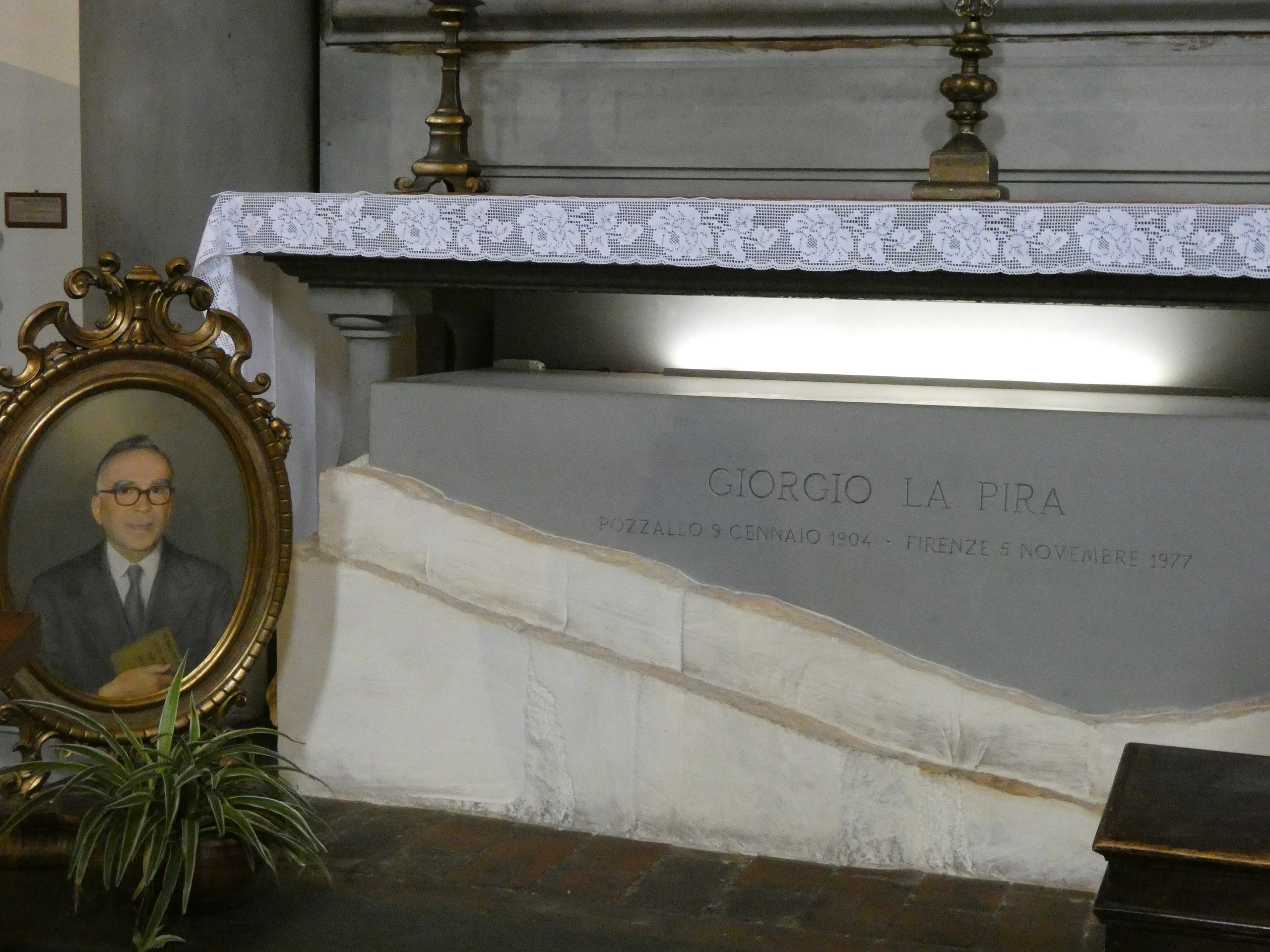
Giorgio La Pira died on Saturday 5 November 1977. His body lay in state in San Marco, and huge crowds attended his funeral in the Duomo. He was now being called the “Sindaco Santo [Saintly Mayor]”. He was initially buried in the Florence cemetery of Rifredi, where his tomb was adorned by a lamp gifted by young people from Florence, Israel and Palestine with the inscription “Pace, shalom, salaam”.
A Model Layman
Giorgio La Pira was declared Venerable in 2018. He spent his life as a devoted lay member of the Church and as a Lay Dominican.
Lumen Gentium, one of the documents of the Second Vatican Council, states that “the laity, by their very vocation, seek the kingdom of God by engaging in temporal affairs and by ordering them according to the plan of God. They live in the world, that is, in each and in all of the secular professions and occupations. … They are called there by God that by exercising their proper function and led by the spirit of the Gospel they may work for the sanctification of the world from within.”
Three decades before Vatican II, Giorgio La Pira, at the age of 27, wrote to his aunt Settimia Occhipinti:
“There is no doubt that the Lord instilled the desire for priestly grace into my soul. Only, He wants me to continue donning my lay apparel so that my work be more fruitful in the secular world that is far from Him. But the aim of my life is clearly set forth, which is to be a missionary of the Lord in the world, and I must carry out this apostolate in the conditions and the setting within which the Lord has set me.”
April 1931 Giorgio La Pira
Christine Brennan 2026